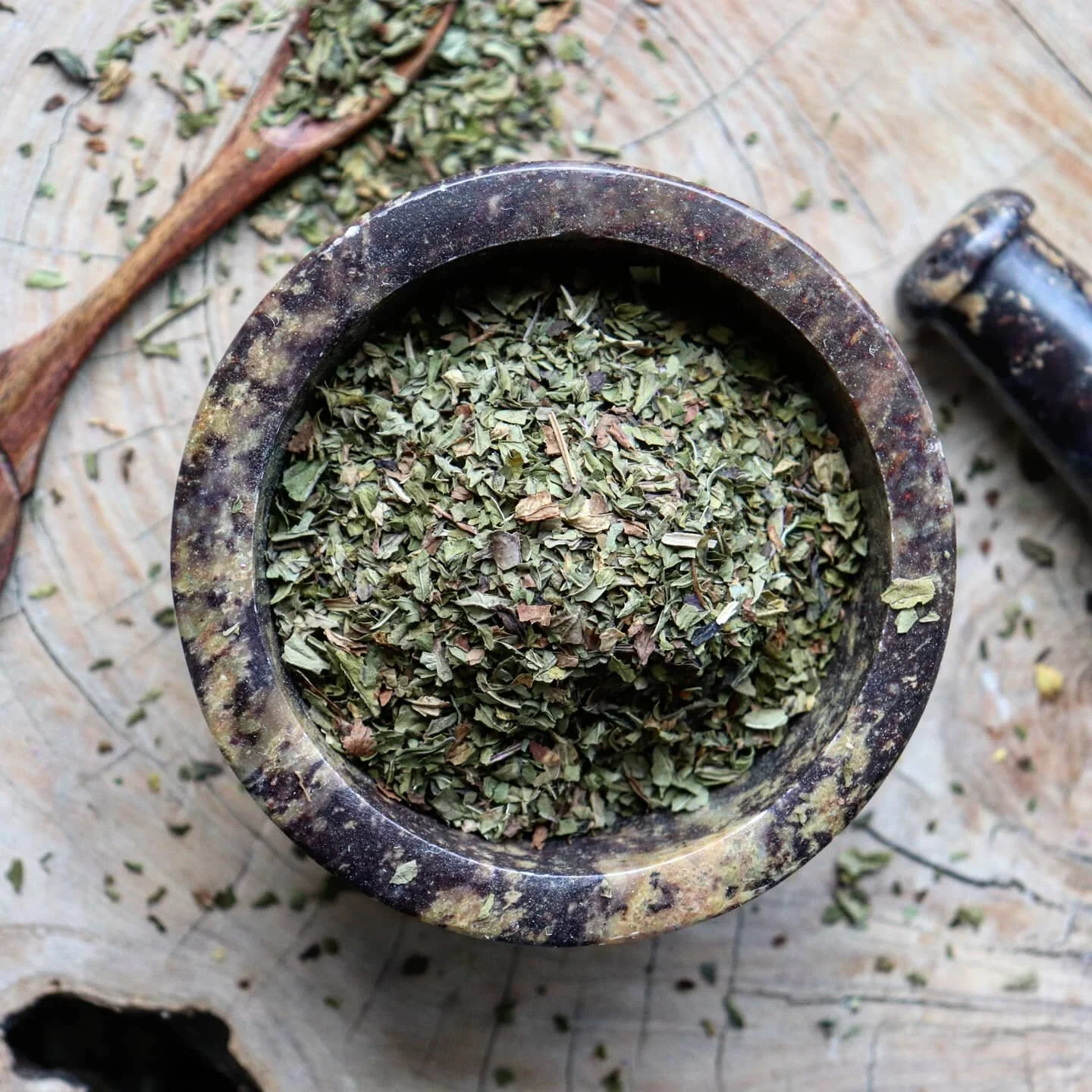
Hypericum perforatum
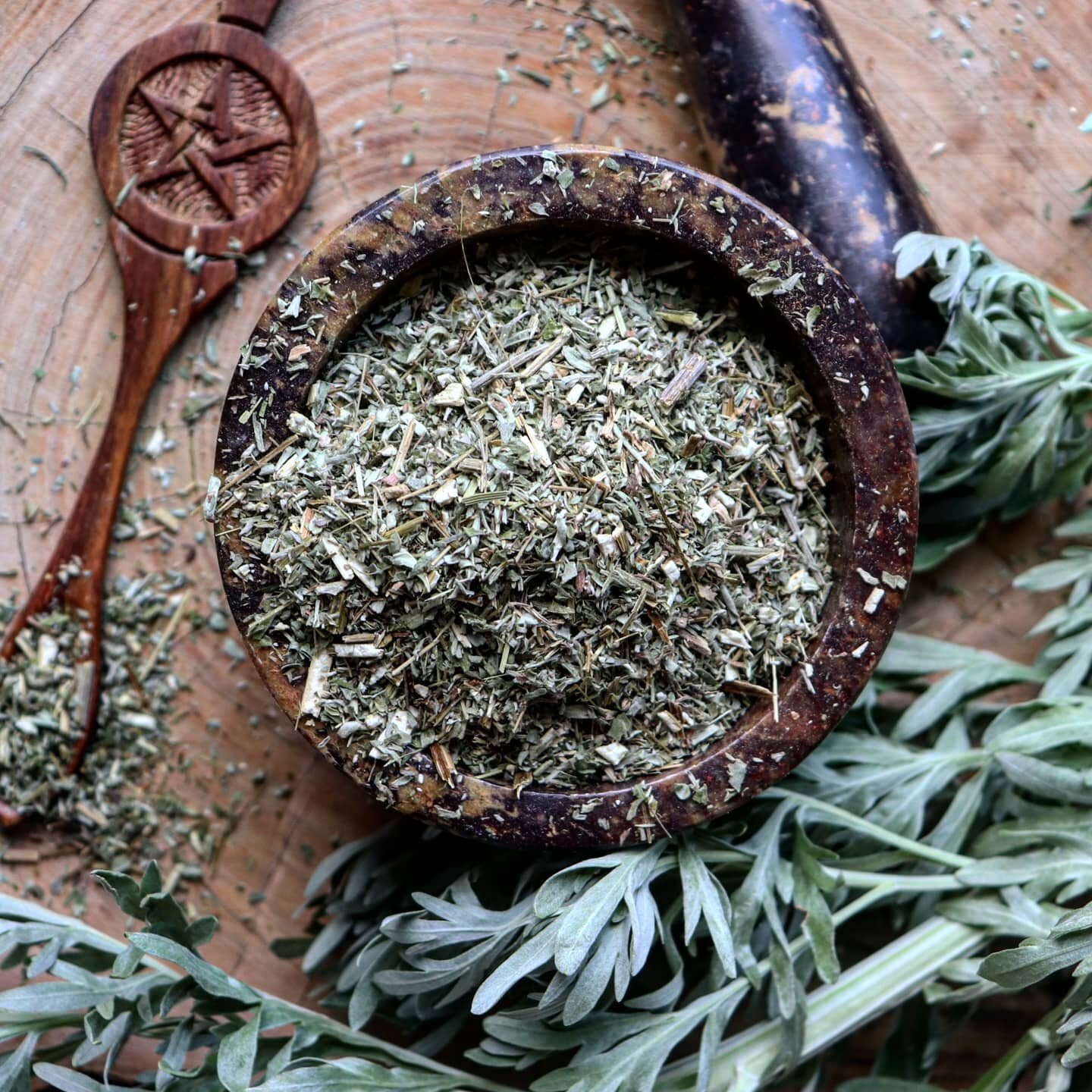
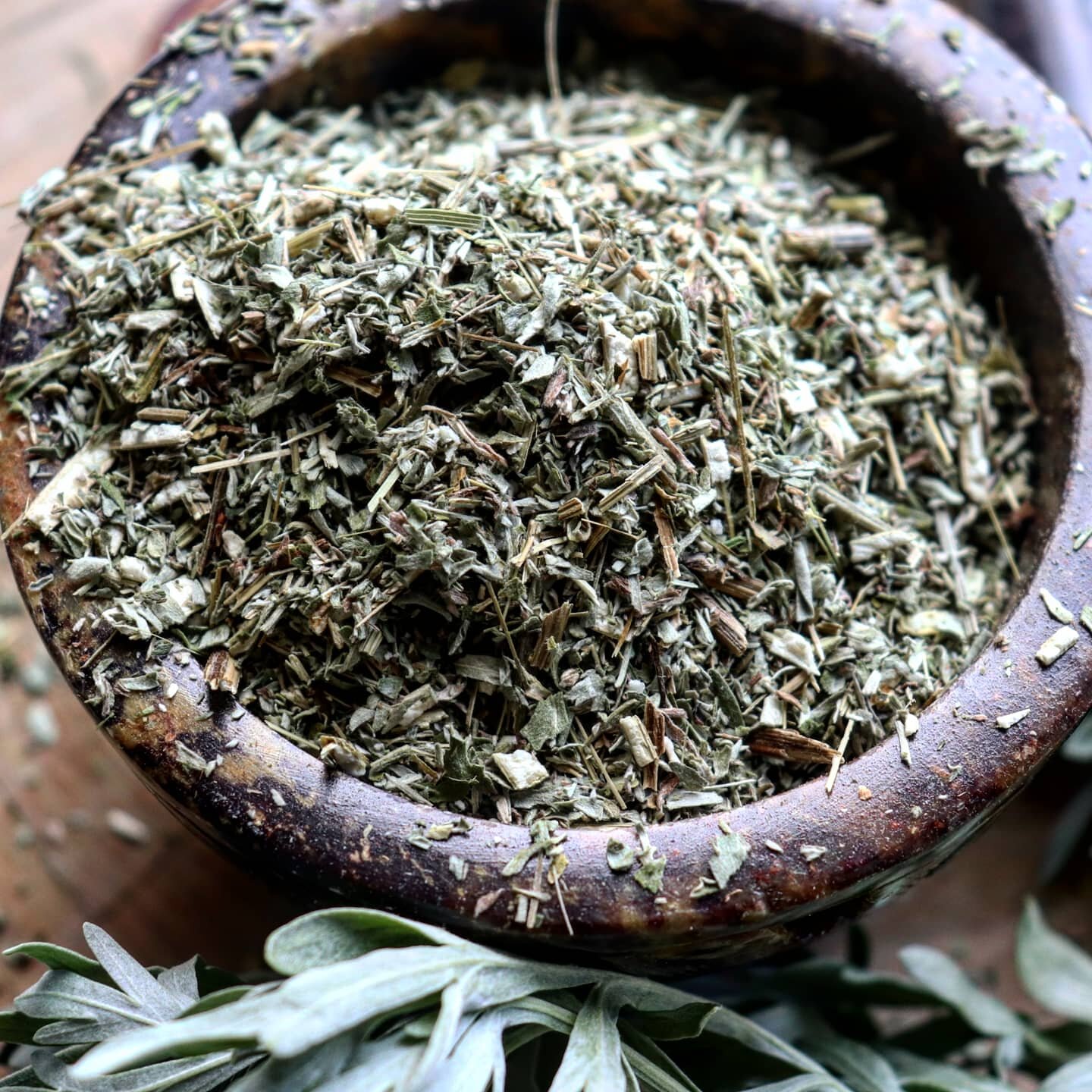
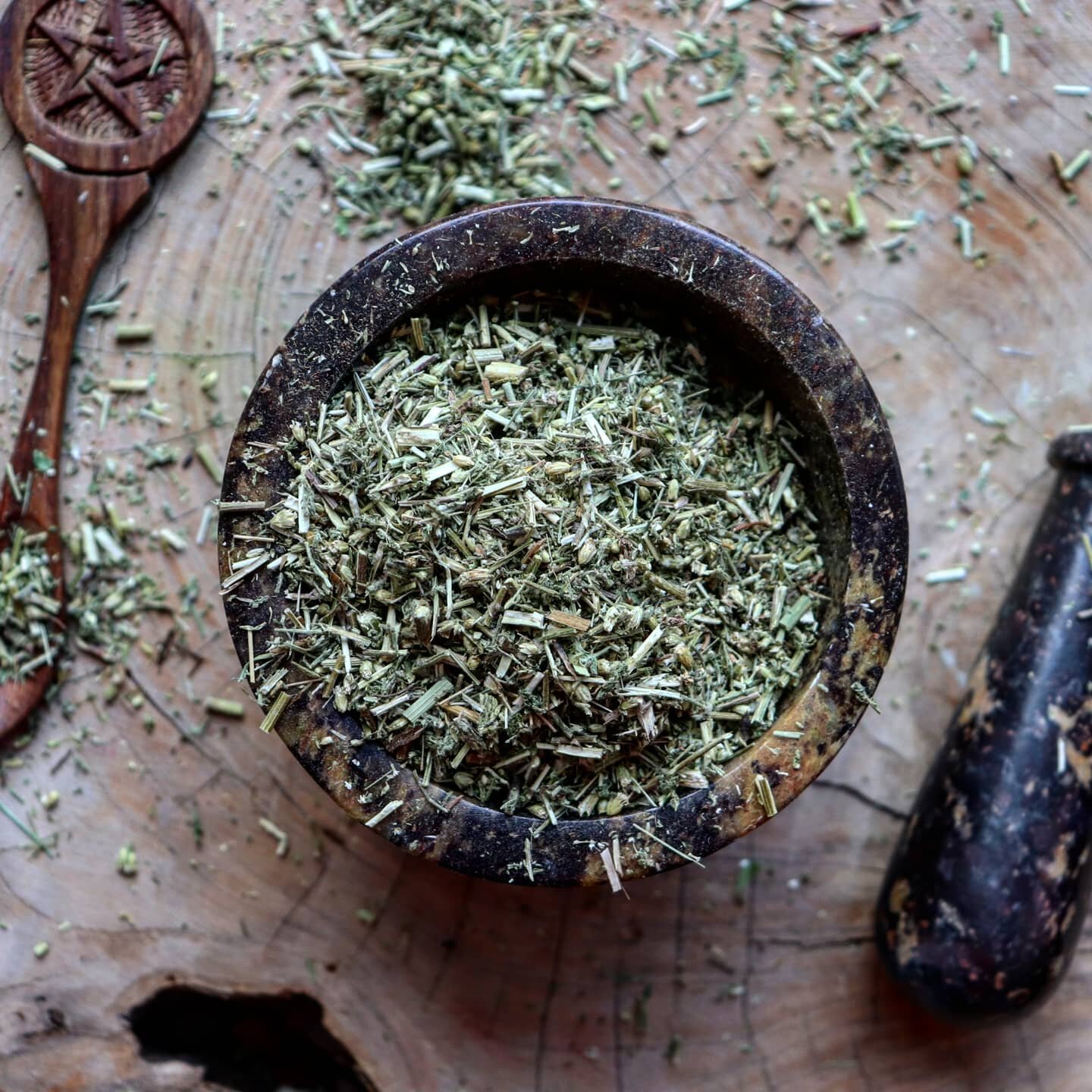
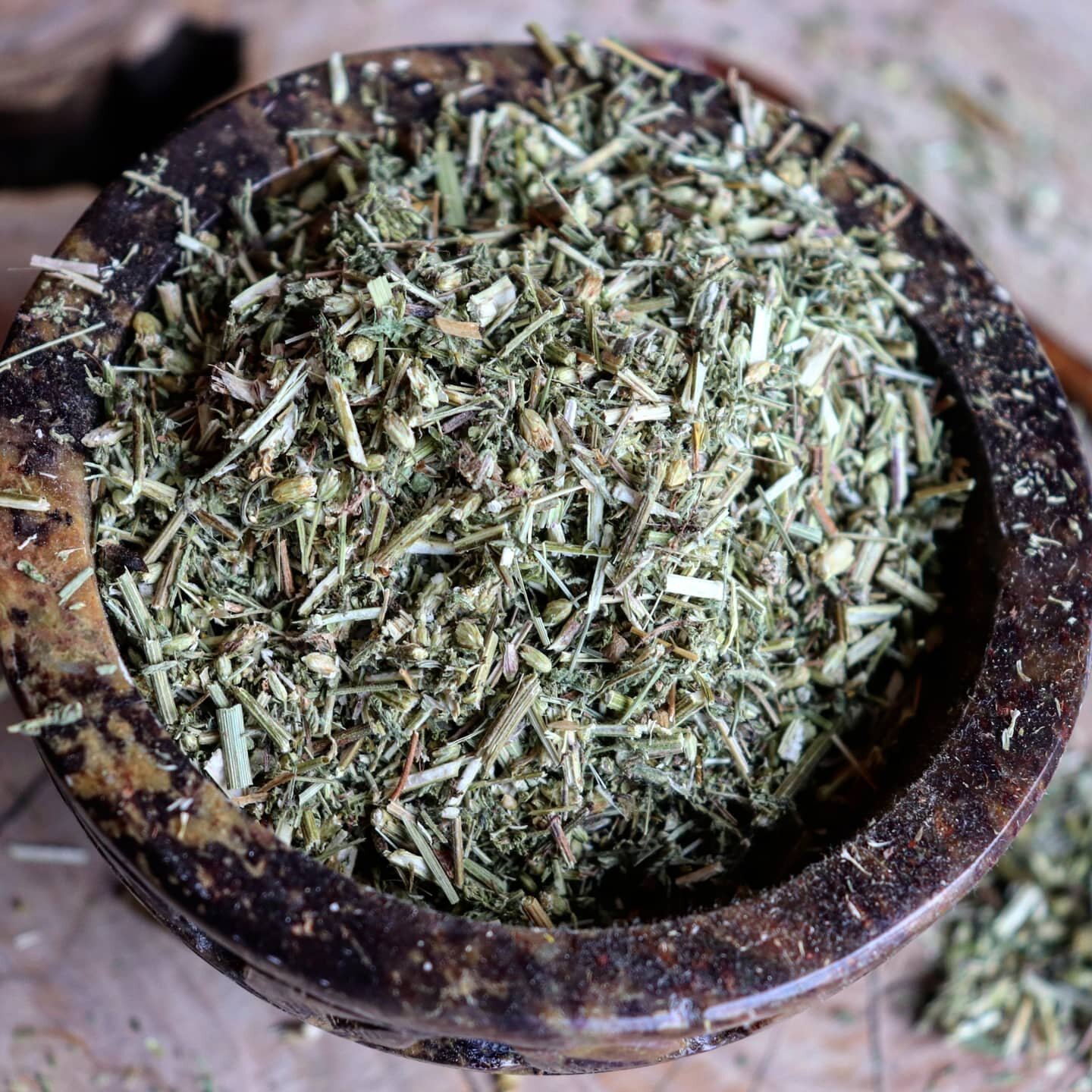
Cut and Sifted—available in 1 ounce or 1/2 ounce and packaged in a plastic pouch.
Native to Europe, Saint John’s wort has naturalized in temperate climates around the globe. Its bright yellow flowers are reminiscent of the sun and are traditionally harvested in the peak of summer between June and August. St. John’s wort has a long history of use in traditional Western herbal practices. Typical preparations include steeping as tea, oil infusion, and extract.
The most popular use of St. John’s Wort medicinally is for depression. Studies of various constituents of this herb suggest that there is indeed something to the claim of its effectiveness against mild depression. It does not seem to be at all effective against severe depression.
History + Folklore
It is traditionally burned in the Midsummer Fires. Flowers brought into the house on Midsummer Day are said to protect the household from a myriad misfortunes, including invasion by evil spirits, the evil eye, illness and fire.
St. John’s Wort has been used in medicine for over 2.400 years. It was used in ancient Greece and prescribed by Hippocrates and others for insanity, among other problems. It was also used in the Crusades to treat battle wounds.
Magickal
Health, Strength, Protection, Love, Divination
Masculine, Sun, Fire
St. John’s Wort can be added to the fires for Midsummer celebrations and used to make garlands. The infused oil might be useful for an anointing oil for Midsummer rituals and exorcism. It’s bloody red color also lends it well to death and rebirth rituals and celebrations of women’s mysteries.
It can also be burned during rituals of exorcism, especially of poltergeists.
It is said that it will cure melancholy.
Warnings: Not to be used during phototherapy. Fair-skinned persons should avoid excessive exposure to sunlight during use. May decrease the blood levels of certain orally administered drugs. Consult a qualified healthcare practitioner before taking with medications.
Hypericum perforatum
Cut and Sifted—available in 1 ounce or 1/2 ounce and packaged in a plastic pouch.
Native to Europe, Saint John’s wort has naturalized in temperate climates around the globe. Its bright yellow flowers are reminiscent of the sun and are traditionally harvested in the peak of summer between June and August. St. John’s wort has a long history of use in traditional Western herbal practices. Typical preparations include steeping as tea, oil infusion, and extract.
The most popular use of St. John’s Wort medicinally is for depression. Studies of various constituents of this herb suggest that there is indeed something to the claim of its effectiveness against mild depression. It does not seem to be at all effective against severe depression.
History + Folklore
It is traditionally burned in the Midsummer Fires. Flowers brought into the house on Midsummer Day are said to protect the household from a myriad misfortunes, including invasion by evil spirits, the evil eye, illness and fire.
St. John’s Wort has been used in medicine for over 2.400 years. It was used in ancient Greece and prescribed by Hippocrates and others for insanity, among other problems. It was also used in the Crusades to treat battle wounds.
Magickal
Health, Strength, Protection, Love, Divination
Masculine, Sun, Fire
St. John’s Wort can be added to the fires for Midsummer celebrations and used to make garlands. The infused oil might be useful for an anointing oil for Midsummer rituals and exorcism. It’s bloody red color also lends it well to death and rebirth rituals and celebrations of women’s mysteries.
It can also be burned during rituals of exorcism, especially of poltergeists.
It is said that it will cure melancholy.
Warnings: Not to be used during phototherapy. Fair-skinned persons should avoid excessive exposure to sunlight during use. May decrease the blood levels of certain orally administered drugs. Consult a qualified healthcare practitioner before taking with medications.

 Image 1 of 2
 Image 2 of 2