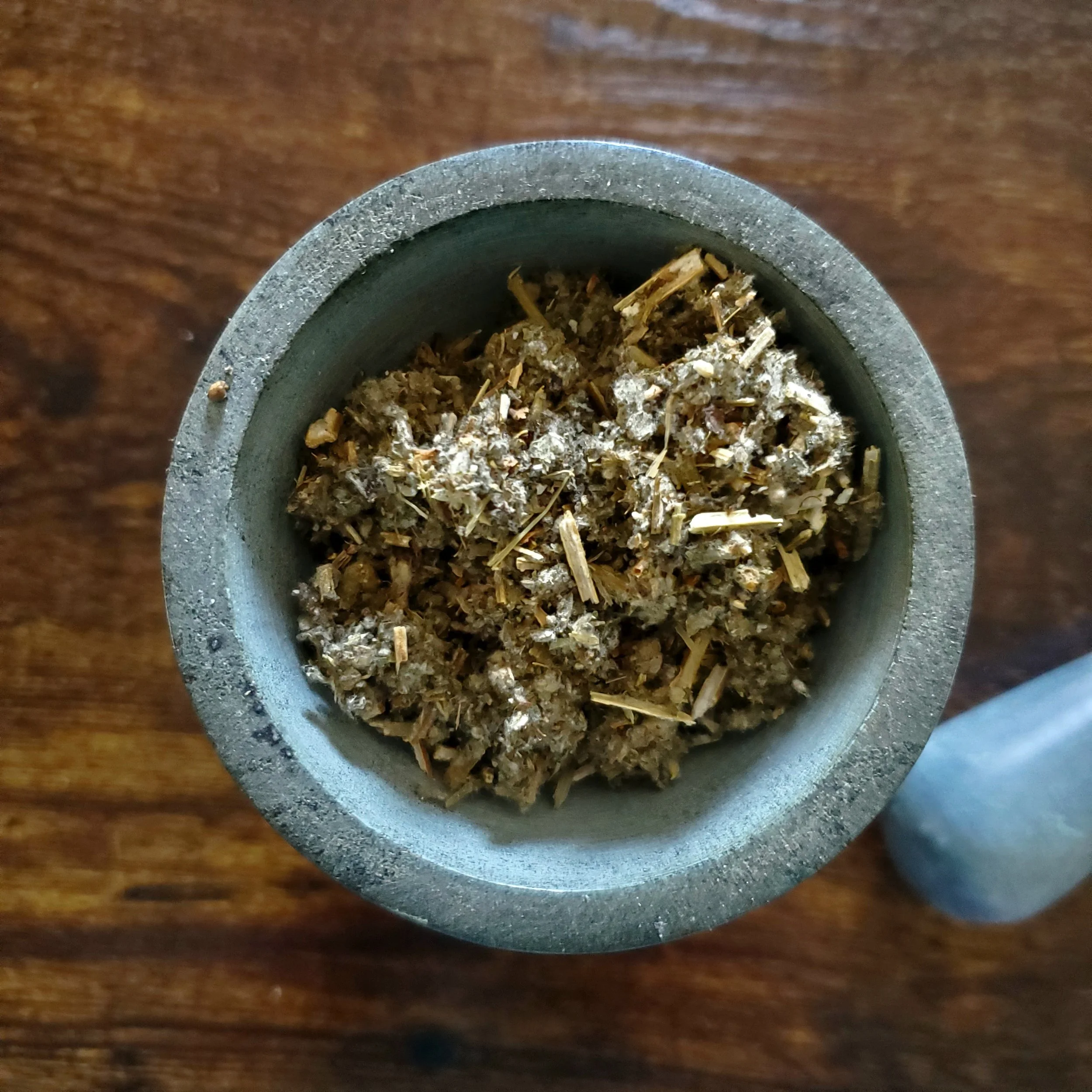
Crataegus laevigata
USDA organic & Kosher
Flowers and leaves cut and sifted—available in 1 ounce or 1/2 ounce and packaged in a plastic pouch.
Crataegus laevigata is a large shrub native to Europe and a member of the Rosaceae family. Hawthorn leaf and hawthorn flower can be employed in much the same way as the berries and hold many similar beneficial properties. Also spelled, hawthorne, the leaf and flower can be steeped as hawthorn tea, added to cordials, or tinctured.
Hawthorn leaf, flower, and berry have been praised over the centuries for their heart elevating properties. Believed to uplift and strengthen both the physical and emotional heart, hawthorn, as it supports healthy cardiovascular function, was also revered for ceremonial and spiritual purposes.
History + Folklore
Hawthorn flowers bloom around the first of May and have traditionally signified the first days of summer. Sprigs of hawthorn were incorporated into the Beltane festivals of ancient Europe celebrating this time of the year.
The name ‘hawthorn’ comes to us from the Anglo-Saxon ‘haegthorn or ‘hagedorn’, meaning ‘hedge thorn’, referring to its long use as a hedge shrub planted along field boundaries. These hedges would have been places full of medicinal and magical plants and from this we get the term ‘hedge witch.’
Magickal
Fertility, Chastity, Happiness, Fae, Lighting Protection
Masculine, Mars, Fire
Hawthorn helps release blocked emotional energy, eases symptoms of stress, tempers anger, gently opens the heart , and promotes well-being. Hawthorn works slowly and deeply and with long-term positive effects with consistent use.
Hawthorns have long been used to increase fertility—therefore you see it utilized at weddings often.
Hawthorns are sacred to fairies, and are part of the tree fairy triad, “Oak, Ash and Thorn”. If seen all three of these together, you may run into fairies.
Warnings: no known precautions
Crataegus laevigata
USDA organic & Kosher
Flowers and leaves cut and sifted—available in 1 ounce or 1/2 ounce and packaged in a plastic pouch.
Crataegus laevigata is a large shrub native to Europe and a member of the Rosaceae family. Hawthorn leaf and hawthorn flower can be employed in much the same way as the berries and hold many similar beneficial properties. Also spelled, hawthorne, the leaf and flower can be steeped as hawthorn tea, added to cordials, or tinctured.
Hawthorn leaf, flower, and berry have been praised over the centuries for their heart elevating properties. Believed to uplift and strengthen both the physical and emotional heart, hawthorn, as it supports healthy cardiovascular function, was also revered for ceremonial and spiritual purposes.
History + Folklore
Hawthorn flowers bloom around the first of May and have traditionally signified the first days of summer. Sprigs of hawthorn were incorporated into the Beltane festivals of ancient Europe celebrating this time of the year.
The name ‘hawthorn’ comes to us from the Anglo-Saxon ‘haegthorn or ‘hagedorn’, meaning ‘hedge thorn’, referring to its long use as a hedge shrub planted along field boundaries. These hedges would have been places full of medicinal and magical plants and from this we get the term ‘hedge witch.’
Magickal
Fertility, Chastity, Happiness, Fae, Lighting Protection
Masculine, Mars, Fire
Hawthorn helps release blocked emotional energy, eases symptoms of stress, tempers anger, gently opens the heart , and promotes well-being. Hawthorn works slowly and deeply and with long-term positive effects with consistent use.
Hawthorns have long been used to increase fertility—therefore you see it utilized at weddings often.
Hawthorns are sacred to fairies, and are part of the tree fairy triad, “Oak, Ash and Thorn”. If seen all three of these together, you may run into fairies.
Warnings: no known precautions

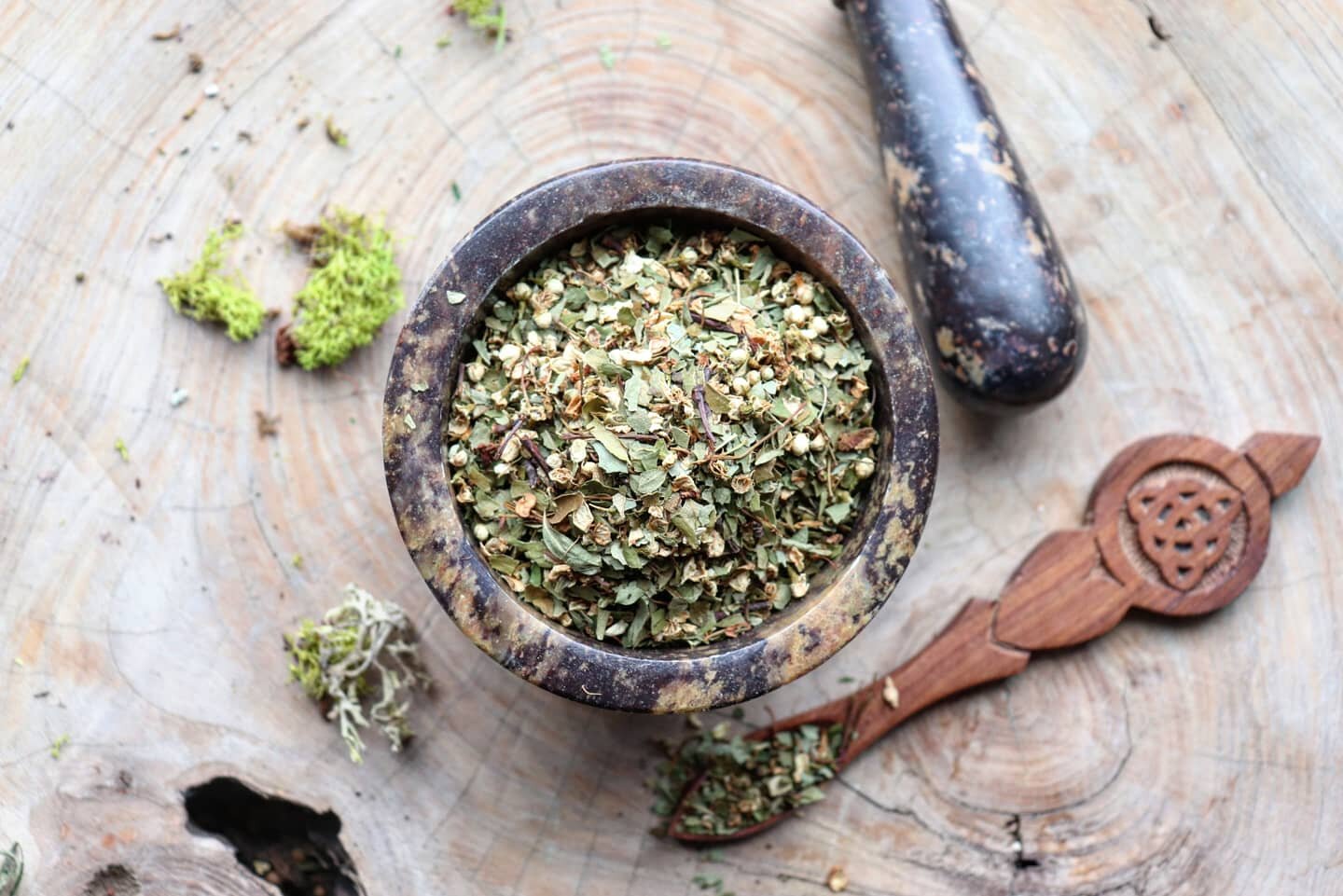 Image 1 of 2
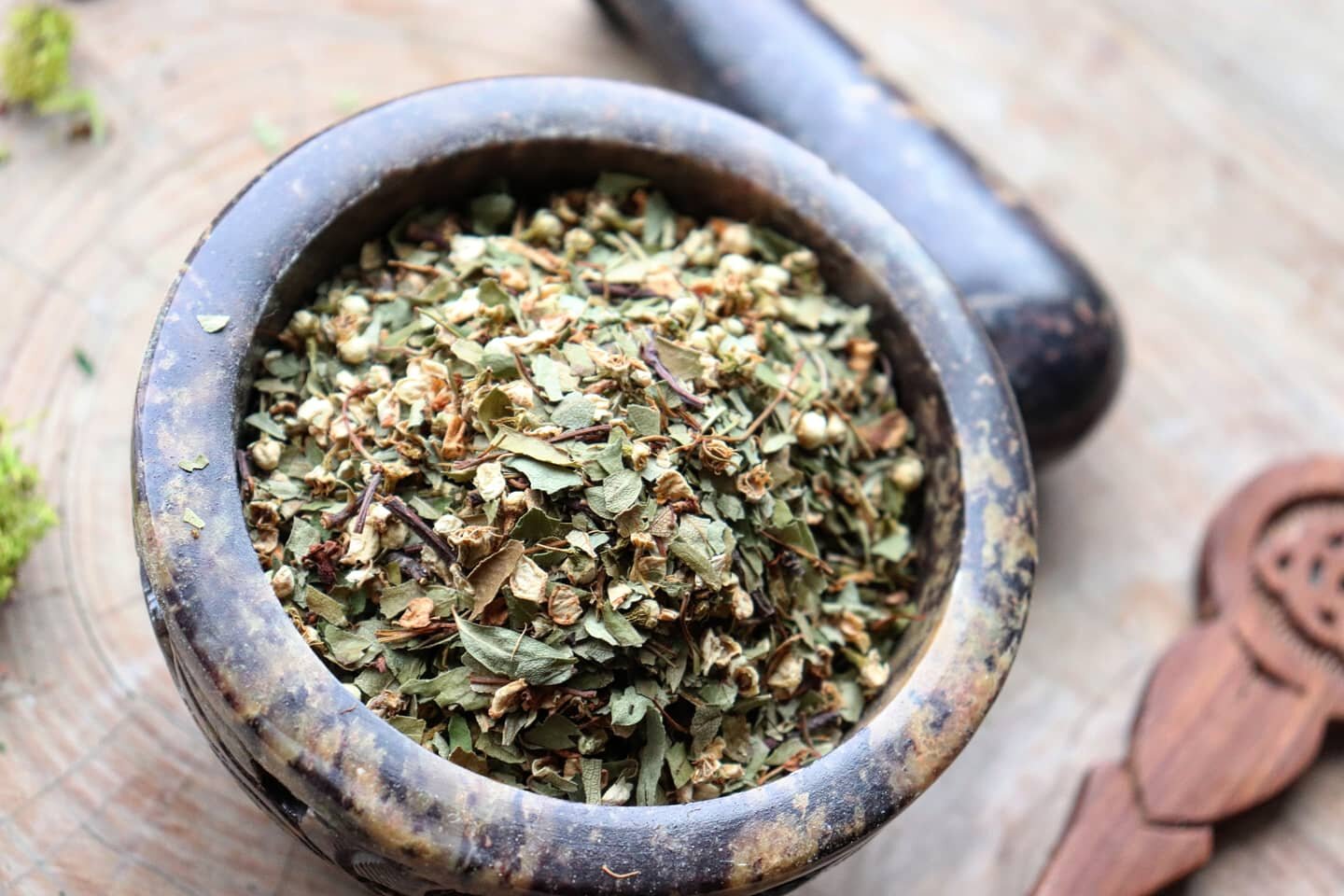 Image 2 of 2